
Em Rose doesn’t mince words. When she talks about her time in Dubai, it’s not the glittering towers or the desert sun that sticks with you-it’s the silence. The kind that follows a door closing after a client leaves. The kind that fills an apartment when you realize you’re alone again, but this time, you’re not sure if you even want to be found.
She’s not the first woman to walk out of that world. But she’s one of the few who did it without a script, without a PR team, and without selling her story to a streaming network. Her book, Whore & Tell, isn’t about glamour. It’s about survival. And somewhere in the middle of those pages, she drops a line that still echoes: girls escort dubai isn’t a job listing. It’s a symptom.
What No One Tells You About the Dubai Girl Escort Scene
People think Dubai is all luxury yachts and private jets. But behind the velvet ropes and gold-plated elevators, there’s a network that runs on desperation, debt, and digital ads. The women you see on Instagram with perfect lighting and designer bags? Many of them aren’t influencers. They’re clients of agencies that charge $5,000 a month just to keep their profiles active. And those profiles? They’re not selling lifestyle. They’re selling access.
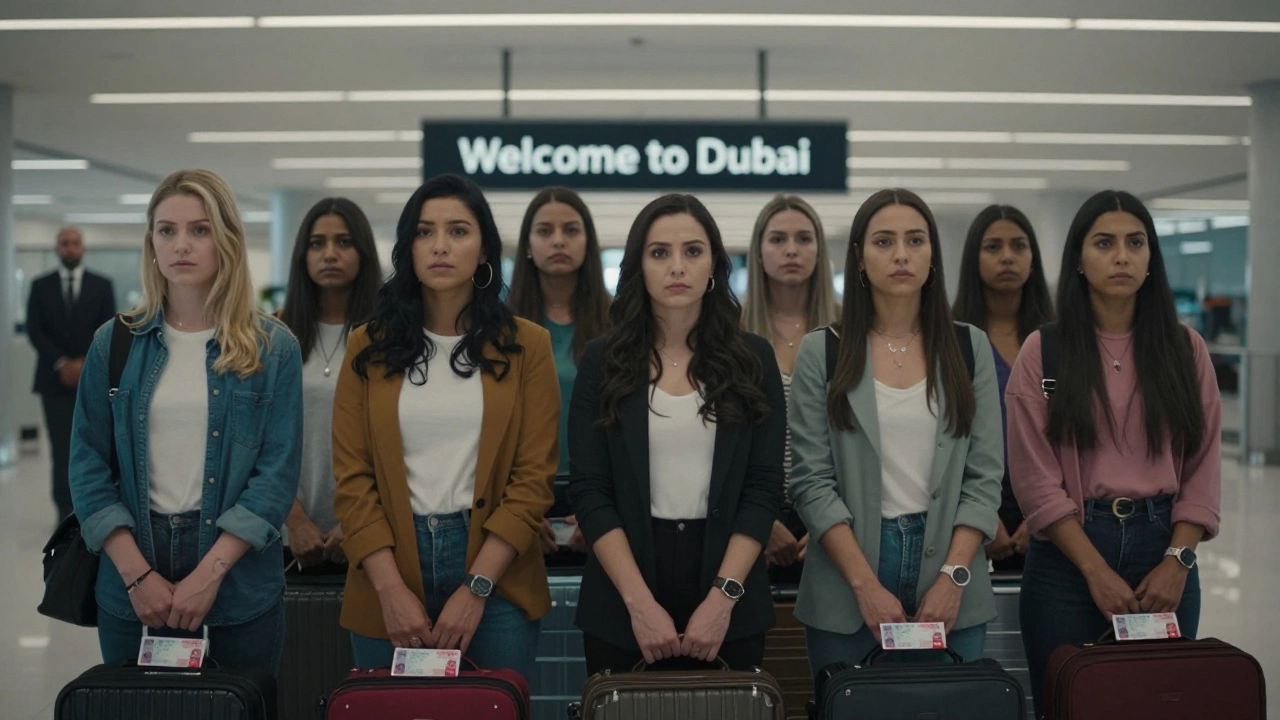
Em describes how women from Eastern Europe, Southeast Asia, and even Latin America are flown in under tourist visas, told they’ll work as models or hostesses, then handed a contract they can’t read and a list of rules they can’t break. One rule: never mention the word "sex" in a message. Another: always wear heels when you meet a client. A third: don’t cry in the car.
There’s no union. No HR department. No way to file a complaint without risking deportation-or worse. And when things go wrong? The agencies vanish. The phones go dead. The women are left with no papers, no money, and no way home.
The Dubai Escort Problem Is Bigger Than One City
What happens in Dubai doesn’t stay in Dubai. It leaks into other cities. The same agencies that operate in the UAE have branches in London, Miami, and even Sydney. The model is the same: recruit vulnerable women, isolate them, monetize their bodies, then discard them when they’re no longer "profitable."
Em met a woman in Melbourne last year who had been in Dubai for six months. She’d been told she’d earn $15,000 a month. She made $3,200. The rest went to "room fees," "transportation costs," and "agency commissions." When she tried to leave, they took her passport. She slept in a storage unit for three weeks before a neighbor called the police.
This isn’t rare. It’s routine. And the system doesn’t care if you’re 19 or 35. If you’re alone, broke, and desperate enough to say yes to a plane ticket, you’re a target.
How the System Keeps Women Silent
There’s a reason so few speak out. It’s not just fear. It’s shame. And the shame isn’t just from society-it’s engineered.
Agencies train women to believe they’re lucky to be there. "You’re living better than your family back home," they say. "You’re free. You’re independent." But freedom doesn’t mean you can walk away. It means you can choose which room to go into.
Em remembers one client who sent her a $2,000 gift card to a luxury spa. "He said it was for my self-care," she told me. "I didn’t know how to explain that I hadn’t had a real bath in three weeks because the water in my apartment was always cold. That I was too scared to turn the lights off at night because I didn’t know who might knock on the door. That self-care wasn’t a massage. It was sleep. Just one night of sleep without waiting for the next knock."
The Girls Who Left-And What They Found
Not everyone who leaves Dubai comes out broken. Some do. But others? They rebuild.
There’s a woman in Toronto now who runs a nonprofit helping survivors of trafficking. She was a Dubai girl escort for 14 months. She didn’t have a lawyer. She didn’t have a visa lawyer. She had a phone, a burner SIM, and a friend who worked at a hotel and let her hide in the laundry room for two nights until she could get on a flight.
Em says the turning point for her wasn’t a rescue. It was a realization: "I didn’t need permission to leave. I just needed to stop believing I didn’t deserve to."
Now she teaches writing workshops for women who’ve survived exploitation. She doesn’t call them survivors. She calls them writers. Because stories matter. And if you can write your truth, you can stop letting others define it.
Why This Matters Outside Dubai
The Dubai escort problem isn’t just about Dubai. It’s about how the world treats women who are invisible. It’s about how we look away when the price is too high to ignore. It’s about how we call women "sex workers" to make it sound legal, when what we’re really saying is: "We don’t have to fix this."
When you see a woman in a high-end hotel lobby in Dubai, dressed in a dress that costs more than your monthly rent, you don’t see the bruises. You don’t see the panic attacks. You don’t see the fear that if she says no one more time, she’ll be sent back to a country where her family has already disowned her.
Em doesn’t want pity. She wants action. She wants people to stop treating this as a "local issue" and start treating it as a global failure.
What You Can Do-Even If You’re Not in Dubai
You don’t need to fly to the UAE to make a difference. Here’s what actually helps:
- Don’t search for "dubai girl escort" on Google. Every click fuels the algorithm that pushes these ads.
- If you see an ad for "private companionship" in a city you live in, report it to local anti-trafficking groups. Don’t assume it’s legal. Assume it’s exploitation.
- Support organizations that help survivors rebuild. Not just shelters-real programs that give them housing, legal aid, and job training.
- Stop romanticizing the "rich man’s fantasy." That fantasy is built on broken women.
And if you’re reading this because you’re stuck in that world? You’re not alone. You never were. There are people who will help you. You just have to reach out. One text. One call. One step.
Em’s number isn’t in the book. But she says this: "If you’re reading this and you’re still in it, write me at [email protected]. No judgment. No questions. Just a voice that says: you’re not the problem. The system is."
And if you’re wondering why she’s still talking about this after all these years? She says it’s simple: "I didn’t survive so I could stay quiet. I survived so someone else wouldn’t have to."
There’s a moment in her book where she writes about the first time she saw the ocean in Dubai. She was 21. She’d never seen saltwater before. She stood on the beach, barefoot, and cried. Not because it was beautiful. But because for the first time, she felt small-not because she was powerless, but because the world was bigger than the room she’d been locked in.
That’s the real story. Not the sex. Not the money. Not the fame. It’s the moment you realize you’re not alone in the dark-and that someone else has already turned on the light.
And yes, the Dubai escort problem is real. But so is the power of speaking up.